Barn Electrical Needs: What Every Property Owner Should Know
Barns are some of the hardest-working buildings on a property, but they're often one of the most overlooked when it comes to electrical safety. Whether your barn is used for livestock, equipment storage, hay, a workshop, or simply extra storage, having a safe and dependable electrical system is just as important as it is in your home.
Over the years, I've seen barns with extension cords being used as permanent wiring, overloaded circuits, exposed wiring, and electrical systems that simply weren't designed for the way the building is being used today. Those shortcuts may seem to work for a while, but they can create unnecessary safety risks and make everyday work more difficult.
Every Barn Is Different
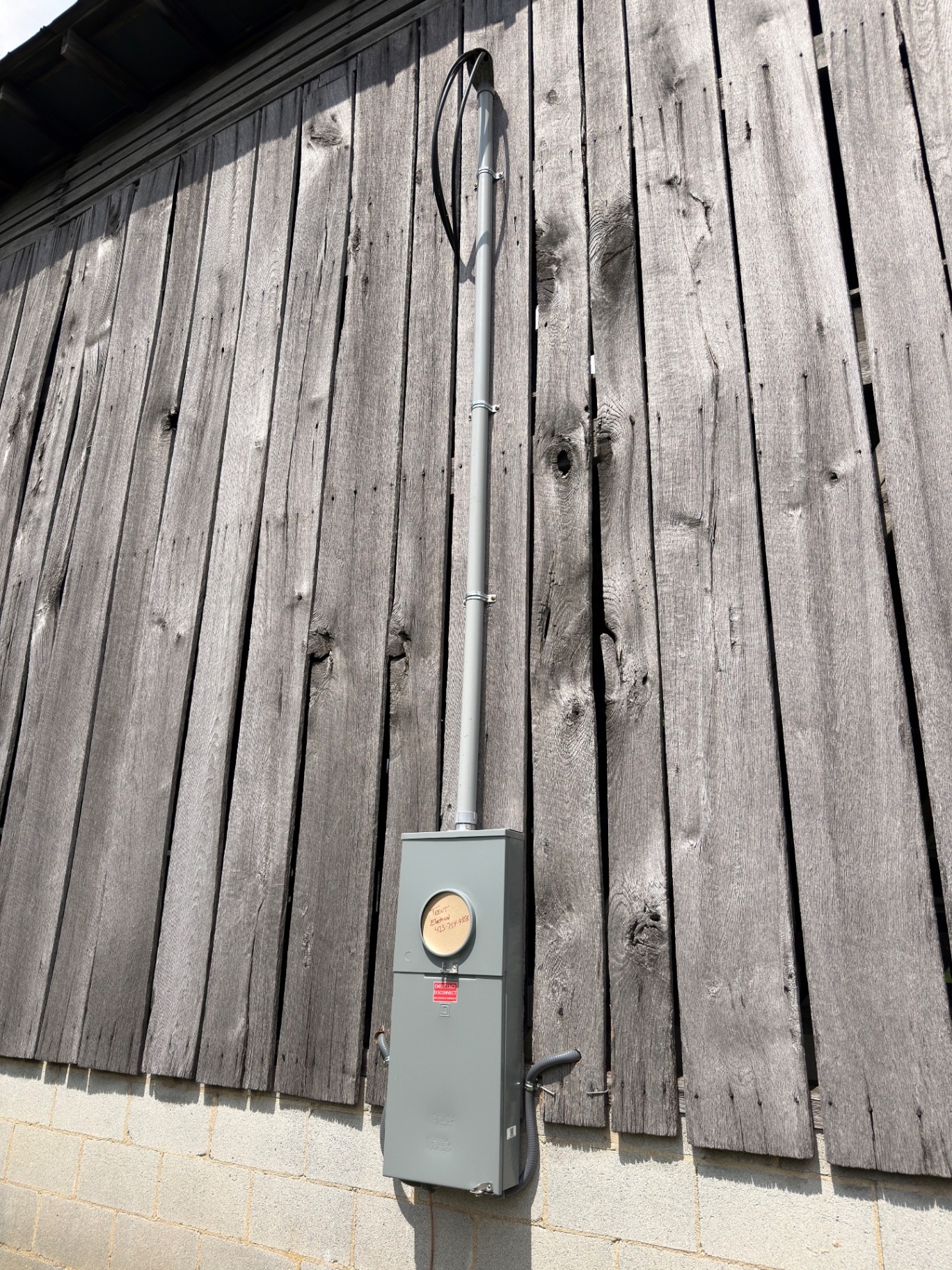
Recently, I completed a new electrical service for a barn in the Goshen Valley area near Church Hill, Tennessee. Every barn has different electrical needs. Some only require lighting and a few receptacles, while others need enough capacity for water pumps, ventilation fans, freezers, air compressors, welders, or future expansion. Planning the electrical system correctly from the beginning helps ensure it's ready for whatever the property owner needs down the road.
One of the biggest challenges in a barn is the environment itself. Unlike most homes, barns are exposed to dust, moisture, humidity, temperature changes, and the possibility of physical damage from equipment or livestock. That's why choosing the right materials and protecting wiring from damage is so important.
Lighting That Actually Works
Lighting is another area that deserves attention. A well-lit barn isn't just more convenient — it's safer. Whether you're feeding animals before sunrise, working on equipment after dark, or simply putting things away, good lighting makes a noticeable difference. Modern LED lighting provides excellent visibility while using much less electricity than older fixtures.
Put Power Where You Actually Use It
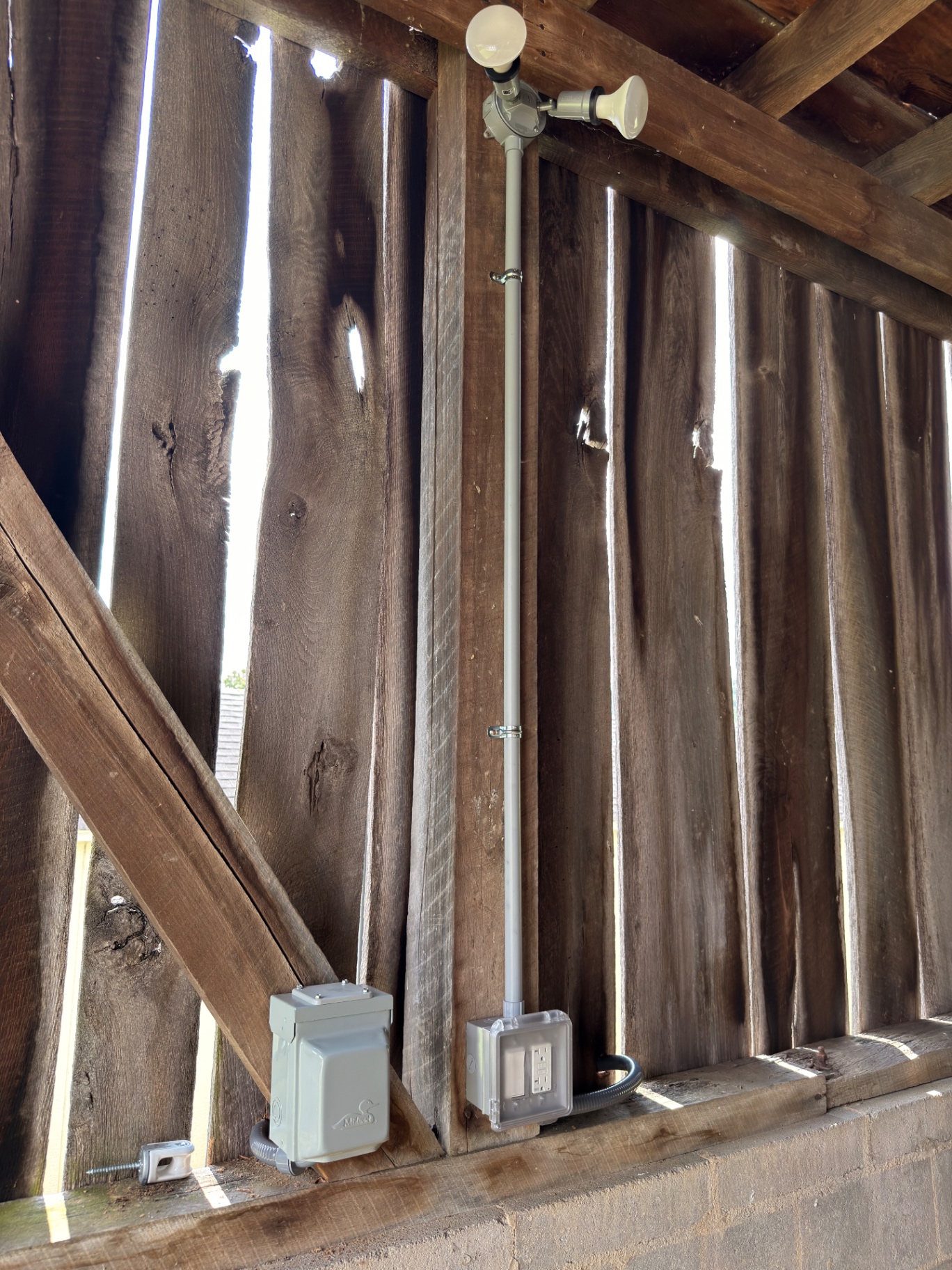
It's also important to think about where you need power. I've seen plenty of barns where extension cords are stretched across the floor because there aren't enough outlets. Installing receptacles where you actually use electricity makes the building safer, more convenient, and reduces unnecessary wear on cords.
If you plan to run welders, air compressors, pressure washers, or other heavy equipment, your electrical system should be designed to handle those loads. If breakers constantly trip, the answer usually isn't installing a larger breaker. More often than not, it's a sign the circuit wasn't designed for the equipment being used or that additional circuits are needed.
Livestock, Moisture, and Long-Term Safety
For barns with livestock, electrical safety becomes even more important. Waterers, fans, heat lamps, and other equipment operate in damp or dusty environments where electrical components can deteriorate over time. Regular inspections and properly installed equipment help reduce the risk of unexpected failures.
I also encourage property owners to think ahead. Even if you don't need additional circuits today, you may decide to add automatic waterers, larger equipment, security lighting, cameras, or another outbuilding in the future. Planning for those possibilities now is often easier than trying to upgrade everything later.
A System Designed Around How You Use the Barn
Whether your barn is brand new or has been standing for decades, a properly installed electrical system can improve safety, convenience, and reliability for years to come. Every property is different, and every electrical system should be designed around how the building is actually used — not just what gets the lights to turn on.
If you own a barn in Church Hill, Goshen Valley, Rogersville, Surgoinsville, Mount Carmel, or anywhere throughout Hawkins County, taking the time to invest in safe, dependable electrical work is one of the best improvements you can make. A well-planned electrical system not only makes daily chores easier but also gives you confidence that your barn is ready for whatever the future brings.