Meter Base, Service Mast & Weatherhead Repair Guide
The meter is the most familiar part of an electrical service, but it is only one piece. An overhead arrangement may also include an attachment point, mast or riser, weatherhead, service-entrance conductors and main disconnect. Underground services use a different route and connection arrangement.
When wind, trees, water or age affects one component, the complete path toward the home's main equipment needs attention. Damage is not always limited to the part that moved visibly.
What the meter base does
The meter base or meter socket supports the utility meter and connects incoming conductors to the property-side service equipment. A cracked enclosure, loose mounting, corrosion, water entry or heat at a connection can affect more than the visible meter face.
Because this equipment is connected to incoming power, a loose or damaged enclosure should not be pushed back into place or opened by a homeowner.
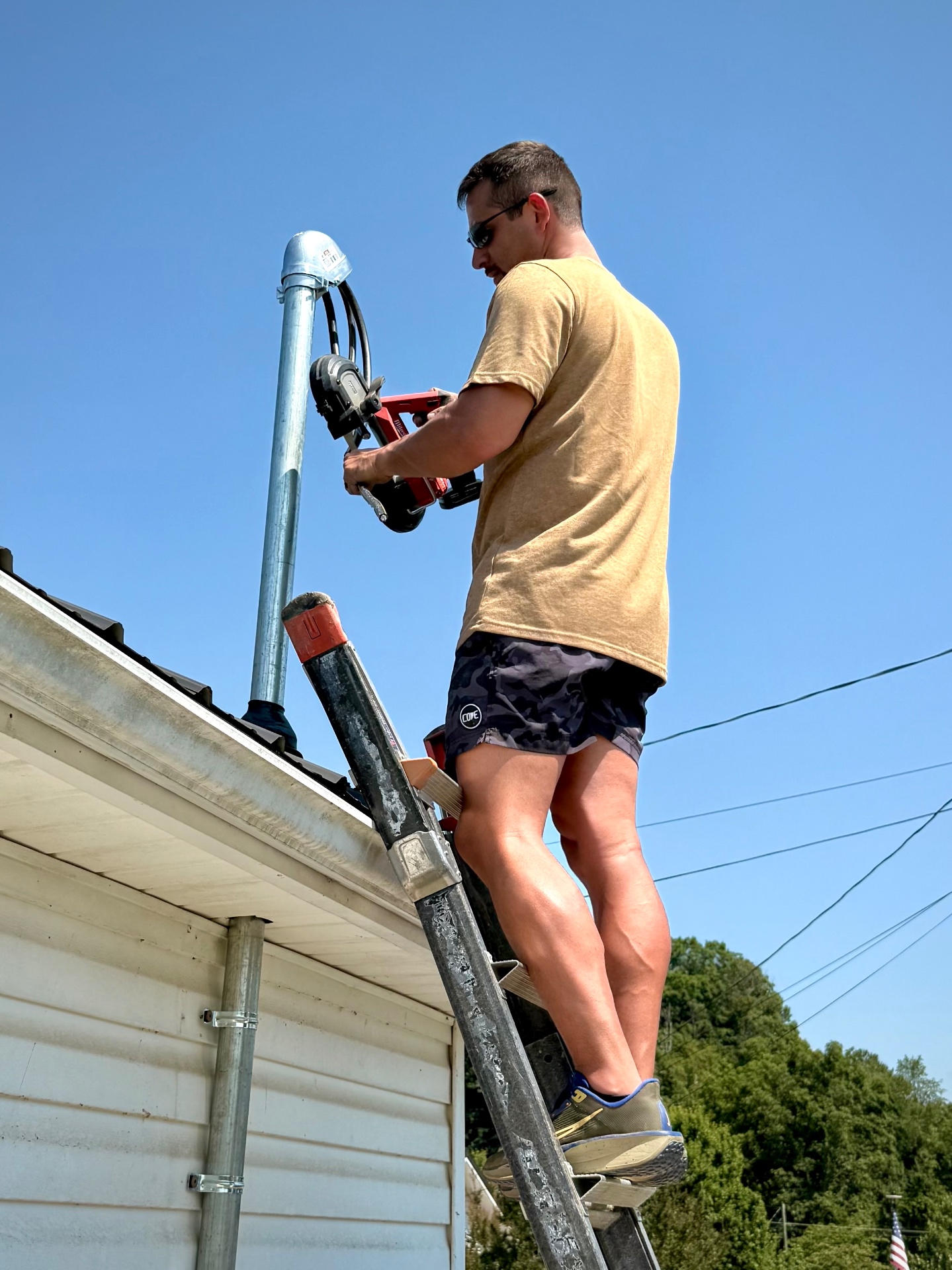
Masts, risers and weatherheads on overhead services
The mast or riser provides a protected route for service conductors. The weatherhead helps keep water out where conductors exit. Supports and attachment hardware help the arrangement remain secure under normal mechanical loads.
A falling limb can bend the mast, pull fittings apart, move the meter enclosure or stress conductors without leaving every problem in plain view. Straightening the visible pipe does not establish that the fittings, supports and wiring remain sound.
Overhead and underground arrangements differ
An overhead service must account for attachment, weather exposure and the route from the utility line. An underground service involves risers, conduit or cable routing, terrain and the serving utility's connection details.
The better arrangement for planned work depends on the existing utility feed, trees, driveways, grading, building position and future property plans. It should be decided from a site review rather than a universal preference.
Utility-owned and customer-owned equipment
The utility and homeowner do not necessarily own the same parts of every service. The dividing point can vary with the provider and the particular service arrangement.
The practical approach is to confirm the boundary with the serving utility. The utility may need to make its side safe or disconnect power before an electrician works on customer-side equipment, followed by inspection and reconnect steps when required.
Storm damage versus planned capacity work
Storm work begins with safety and damage: what moved, cracked, took on water or placed conductors under stress. Stay clear of downed lines, a hanging meter, exposed conductors or a mast pulled from the building and contact the utility when its lines are involved.
Planned capacity work begins with loads and equipment condition. A future addition may affect the meter, conductors, disconnect and panel together. Combining panel and service work can make sense when ratings or condition need to be aligned, but storm damage does not automatically require the largest possible upgrade.
What happens before power is restored
The sequence may include utility disconnection, removal of damaged customer-side equipment, new service components, grounding and bonding work, inspection and utility reconnection. Which steps apply depends on the location and scope.
Accessible connections, supports, weather seals and operation are checked before the work is considered complete. Photos and clear notes are useful when damage, insurance or later property work is involved.