
What Causes Outlets to Stop Working Even When the Breaker Isn't Tripped?
One of the more common electrical calls I get sounds something like this: “The outlet quit working, but the breaker never tripped.” It sounds simple, but there are actually several things that can cause it.
Sometimes the problem is a tripped GFCI somewhere else in the house. Other times it can be a loose connection, a failed receptacle, a bad splice, a broken neutral, moisture, or even damage from previous electrical work.
I recently ran into a good example of this on a house in Bean Station, Tennessee. The homeowner had a group of receptacles that had stopped working, but the breaker in the panel looked completely normal. Nothing had obviously tripped, there were no sparks, and there was no dramatic failure.
At first glance, it looked like one of those problems where you might expect a simple reset. It ended up being a good reminder that a breaker staying on does not necessarily mean the rest of the circuit is healthy.
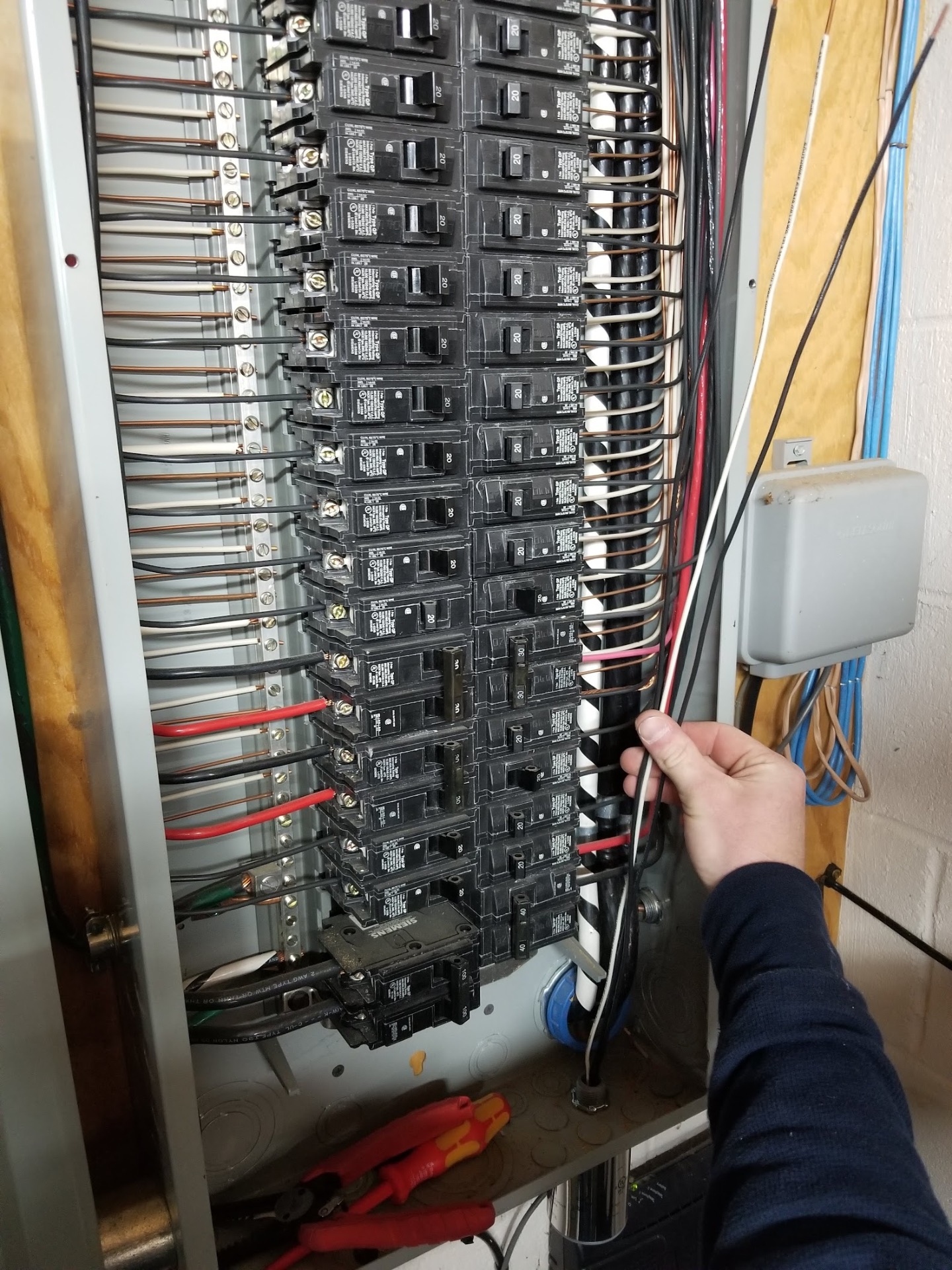
The Breaker Is Only One Part of the Circuit
A circuit breaker protects the wiring from certain overcurrent conditions, but it does not monitor every connection throughout the circuit. A breaker can remain in the ON position while a receptacle, neutral connection, splice, or GFCI farther downstream has failed. That is why looking at the breaker panel is only the first step.
Some breakers also do not look obviously tripped. Depending on the breaker, the handle may sit near the ON position even though it has operated internally. A proper reset usually means moving the handle fully to OFF and then back to ON. If the breaker immediately trips again, that is a sign that something on the circuit needs to be checked rather than repeatedly resetting it.
A GFCI Somewhere Else Can Shut the Outlet Off
One of the most common causes of a dead receptacle with a breaker that still looks normal is a tripped GFCI. The confusing part is that the GFCI may not be in the same room as the dead outlet.
A GFCI receptacle can protect other receptacles downstream from it. That means a dead outlet in a garage, basement, bathroom, kitchen, or outside area may be controlled by a GFCI located somewhere else. I have seen homeowners spend a lot of time checking breakers when the problem was simply a tripped GFCI on the other side of the house.
It is worth checking bathrooms, kitchens, garages, basements, crawl spaces, utility rooms, laundry areas, and outdoor receptacles. If you find a GFCI with a RESET button, press it and see if power returns.
Why GFCIs Trip
A GFCI is designed to detect current leaking somewhere it should not be. Moisture is a common cause, especially around outdoor receptacles, bathrooms, kitchens, garages, and unfinished areas. A damaged appliance, extension cord, motor, or piece of equipment can also cause it to trip.
If a GFCI resets and everything begins working normally again, the problem may have been temporary. If it trips repeatedly or will not reset, there is usually a reason, and that reason needs to be found. Repeatedly forcing it to reset does not solve the underlying problem.
The Bean Station House Was a Good Example
At the Bean Station job, the homeowner knew several outlets had stopped working, but there was no obvious tripped breaker. That is the kind of situation where troubleshooting has to become more systematic. Instead of assuming the dead outlet itself is the problem, you start tracing the circuit and asking where power stops.
That usually means finding the last device that still works and the first one that does not. If one receptacle still has power and the next several are dead, the problem may be at the last working device or the first dead one. Many residential circuits are wired from one box to the next, so one failed connection can shut down several outlets farther downstream.
That is what makes these calls interesting. The outlet that looks dead is not always where the actual failure is.
Loose Connections Can Kill Everything Downstream
A loose hot conductor or neutral conductor can interrupt power to every receptacle after that point. The breaker may stay on because there is no overload or short circuit. The circuit is simply open somewhere.
This can happen at a receptacle terminal, wire connector, splice, switch, or other connection point. Sometimes the connection has been slowly getting worse over time until it finally stops conducting. Other times it may become intermittent first, with outlets working one minute and going dead the next.
If you ever notice an outlet that comes back to life when you wiggle a plug or tap the wall, that is not normal. That can be a sign of a loose connection, and loose electrical connections can create heat.
Backstab Connections Can Become a Problem
Many receptacles allow wires to be pushed into holes in the back of the device. These are commonly called backstab connections. They are quick to install, which is why they are found in a lot of homes.
Over time, those connections can loosen or lose good contact. When that happens, the receptacle may stop working, or everything downstream from it may lose power. This is one reason an electrician may remove receptacles from the wall and inspect how they are connected rather than just checking the face of the device.
A receptacle can look perfectly normal from the front while the connection behind it is failing.
The Last Working Outlet Can Be More Important Than the Dead One
When several outlets are dead, I always want to know where the transition happens. If two receptacles work and the next four do not, that gives you a starting point. The failure is often somewhere near the boundary between working and dead devices.
This is one of the reasons replacing random receptacles is not good troubleshooting. If the problem is a loose connection in a previous box, replacing the first dead outlet will not fix anything.
Good troubleshooting is about finding where the circuit changes from normal to abnormal.
A Receptacle Can Simply Fail
Sometimes the outlet itself really is the problem. Receptacles wear out, especially ones that are used frequently. The internal contacts can loosen, the plastic can crack, terminals can become damaged, or the device can overheat.
If plugs no longer stay firmly in the receptacle, that is a sign the internal contacts may be worn. A loose plug connection can create heat, especially with higher-current loads such as heaters, vacuums, hair dryers, or portable air conditioners.
A receptacle that is discolored, melted, warm, or smells burned needs attention. Replacing it may be necessary, but the wiring behind it should also be inspected to determine why it overheated.
Burn Marks and Melted Plastic Are Not Cosmetic
If you see dark marks around a receptacle, melted plastic, burned insulation, or signs of heat inside the box, do not keep using it. Those are signs that something has been overheating or arcing.
A loose connection is one common cause. A poor plug connection is another. High-current equipment can expose a weak connection that seemed fine when only small loads were plugged in.
The important part is finding the cause, not just putting a new white receptacle over the problem.
A Broken Neutral Can Make an Outlet Look Dead
A standard 120-volt receptacle needs both a hot conductor and a neutral conductor to operate normally. If the neutral opens somewhere on the circuit, the outlet may stop working even though the hot conductor is still energized.
That can be dangerous because someone may assume the receptacle is completely dead when there is still voltage present inside the box. This is why proper testing matters. A simple plug-in tester can be useful, but it does not replace understanding what is happening inside the circuit.
A broken or loose neutral can also cause intermittent problems, flickering, and unusual behavior in connected equipment.
Loose Neutrals Can Create Strange Symptoms
A loose neutral does not always make the entire circuit completely dead. Sometimes the problem comes and goes. Lights may flicker. Receptacles may work intermittently. Devices may act strangely.
In certain types of circuits, especially multi-wire branch circuits, a neutral problem can create much more serious voltage issues. That is one reason neutral connections deserve just as much attention as hot conductors.
Electrical systems should behave consistently. If power is coming and going for no clear reason, there is usually an actual fault somewhere.
Multi-Wire Branch Circuits Can Make Troubleshooting More Complicated
Some homes use multi-wire branch circuits, often called MWBCs. These circuits use two ungrounded conductors that share a neutral when wired properly.
They can work perfectly well, but the shared neutral becomes very important. If that neutral connection fails, the voltage on the connected loads can behave abnormally. This can damage equipment depending on the circuit arrangement and what is operating at the time.
That is why you cannot simply treat any white wire in a box as though it is interchangeable with every other neutral in the electrical system. The circuit configuration matters.
Sometimes a Wall Switch Controls the Receptacle
Before assuming an outlet is bad, check nearby wall switches. In bedrooms and living rooms, receptacles are sometimes intentionally controlled by a switch so a lamp can be turned on and off from the doorway.
Sometimes only half of the receptacle is switched while the other half remains on all the time. A switch that was accidentally turned off can make it look like the receptacle failed.
The switch itself can also fail, which creates another possibility. If the outlet is designed to be switch-controlled and the switch has a loose connection or bad internal contact, the outlet may stop working even though the breaker is still on.
Hidden Splices Can Cause Difficult Problems
Older homes, additions, and remodels can sometimes contain junction boxes or splices that are not where you would expect them. Electrical splices are supposed to remain accessible, but previous work is not always done correctly.
A hidden or poorly made splice can fail years later. When that happens, several outlets may suddenly lose power even though everything worked normally for a long time.
This is where circuit tracing becomes important. If the normal devices all test correctly but power still disappears between two points, you may be dealing with a connection in another box or previous modification to the wiring.
Remodeling Can Create Problems Years Later
Homes change over time. Walls get moved, rooms are added, garages are finished, kitchens are remodeled, and receptacles get relocated.
The current homeowner may have no idea what electrical changes were made 10 or 20 years earlier. A splice that was installed during a remodel may eventually loosen. A cable may have been damaged. A junction box may have been covered.
When a group of outlets goes dead in an older remodeled part of the house, previous electrical work is always something worth considering.
A Receptacle Can Show Voltage and Still Not Work Properly
One of the more confusing electrical problems is when a meter shows voltage at the outlet but the outlet still does not operate equipment correctly.
A poor connection can sometimes show nearly normal voltage when there is no load. Then, when a vacuum, heater, appliance, or other load is plugged in, the voltage drops dramatically.
That is because the connection cannot carry current properly.
This is why electrical troubleshooting is not only about seeing whether 120 volts is present. Sometimes the circuit needs to be tested under load to see how the connection behaves when current is actually flowing.
High-Resistance Connections Can Create Heat
A poor electrical connection creates resistance. When current flows through that resistance, heat is produced.
That is why a loose connection can be dangerous even though the breaker never trips. The current may still be below the breaker's rating while the connection itself is getting very hot.
This is one of the important limitations homeowners should understand about circuit breakers. A breaker is not designed to recognize every loose screw or failing connection in every electrical box.
That is why warning signs such as heat, discoloration, buzzing, or burning smells matter.
Space Heaters Often Expose Weak Outlets
Space heaters are especially good at exposing weak electrical connections because they draw substantial current for long periods of time.
An outlet may charge a phone for years without showing a problem. Plug a 1,500-watt heater into the same worn receptacle and suddenly the weak connection becomes obvious.
The receptacle may get hot. The plug may discolor. The outlet may fail completely.
Hair dryers, portable air conditioners, vacuums, and other higher-current equipment can reveal the same kind of problem.
If an outlet becomes noticeably warm while using equipment, stop using it and have it checked.
Outdoor Receptacles Have Their Own Problems
Outdoor outlets deal with rain, humidity, insects, temperature changes, and condensation. Even when an outdoor receptacle has the proper cover, the environment is harder on electrical equipment than a dry bedroom.
If an outdoor outlet suddenly stops working after a heavy rain, moisture is worth considering. The GFCI may have tripped, water may have entered the enclosure, or corrosion may have developed over time.
A damaged weatherproof cover should not be ignored. These covers are there to help keep moisture away from energized parts.
Garage Outlets Can Affect More Than the Garage
Garages are common places for GFCI protection, and those devices may protect outdoor outlets or other locations downstream. That means a GFCI trip in the garage can make an exterior receptacle appear dead.
Garages also tend to accumulate electrical loads over time. Freezers, battery chargers, power tools, compressors, garage door openers, and extension cords may all be connected in the same general area.
When a garage circuit develops a problem, it is worth looking at everything connected to it rather than focusing only on the first dead receptacle.
Bathroom Outlets Can Be Connected Together
Depending on the age and wiring arrangement of the home, one GFCI device may protect other bathroom receptacles.
That can create a situation where an upstairs bathroom outlet is dead because a GFCI downstairs has tripped.
This is why walking through the home and checking every GFCI device is such a good first step.
A homeowner may discover the problem in two minutes without opening a single electrical box.
Kitchen Circuits Can Be Complicated
Kitchens can have several different circuits serving receptacles and appliances. Countertop receptacles, refrigerators, dishwashers, disposals, microwaves, and other equipment may all be supplied differently.
If one group of kitchen outlets goes dead while everything else still works, it may be on its own circuit or downstream from a particular protective device.
Do not assume every receptacle in the kitchen is tied to the same breaker.
AFCI Protection Can Also Be Involved
Many newer homes use arc-fault circuit interrupter protection. An AFCI breaker is designed to detect certain types of dangerous electrical arcing and disconnect the circuit.
If an AFCI repeatedly trips, the problem may involve damaged wiring, a loose connection, a damaged cord, or a piece of equipment connected to the circuit.
Replacing an AFCI breaker with a standard breaker to stop the nuisance is not a proper solution. The reason it is operating needs to be investigated.
Water Leaks Can Show Up as Electrical Problems
Sometimes the electrical issue is actually the first visible sign of a water problem.
A roof leak may allow water to travel inside a wall. A plumbing leak may drip onto an electrical box. Condensation can also create moisture problems.
Eventually the GFCI trips, a receptacle corrodes, or a connection fails.
If water is reaching electrical equipment, both problems need to be repaired. Replacing the outlet without stopping the leak only delays the next failure.
Nails and Screws Can Damage Wiring
Another problem can appear after a homeowner hangs a television, installs cabinets, mounts shelving, or drills into a wall.
If a long screw or fastener hits an electrical cable, it can damage one or more conductors. Sometimes the breaker trips immediately. Other times the conductor is only partially damaged and continues working until it eventually fails.
If a circuit suddenly develops a problem immediately after drilling or fastening into a wall, stop and consider the possibility that the wiring may have been hit.
Rodents Can Damage Electrical Wiring
Homes with crawl spaces, attics, garages, barns, and outbuildings sometimes have another problem: animals.
Mice and other rodents can chew electrical insulation. That can cause shorts, ground faults, intermittent connections, or completely open conductors.
If an electrical problem appears in an area with obvious rodent activity, damaged wiring may be part of the problem.
Sometimes the Problem Is the Extension Cord or Power Strip
Not every dead-outlet call turns out to be house wiring.
Extension cords fail. Power strips fail. Plug ends become damaged.
Before assuming the receptacle is bad, try a known-good device directly in the outlet when it is safe to do so.
It sounds simple, but basic checks can save a lot of unnecessary troubleshooting.
What a Homeowner Can Safely Check
Before calling an electrician, there are a few basic things a homeowner can reasonably check. Make sure the appliance or device you are using actually works. Check the breaker panel and properly reset any breaker that appears tripped. Check nearby wall switches. Walk through the home and reset any GFCI receptacles. See whether other outlets nearby are also dead.
Also think about what happened before the problem started. Was there a storm? Did someone drill into a wall? Did water leak somewhere? Was a space heater or large appliance being used? Was remodeling work recently completed?
That information can make troubleshooting much faster.
When It Is Time to Call an Electrician
If the obvious checks do not solve the problem, the next step usually involves electrical testing.
That may mean opening electrical boxes, checking connections, tracing the circuit, testing hot and neutral conductors, looking for voltage drop, or locating a failed splice.
Call an electrician sooner if you notice a burning smell, melted plastic, discoloration, buzzing, crackling, unusual heat, repeated breaker trips, repeated GFCI trips, flickering, or intermittent power.
Those are all signs that the problem may be more than a simple tripped device.
The Bean Station Call Is a Good Reminder
The house in Bean Station was a good reminder of why I do not assume a dead receptacle means the receptacle itself failed.
The breaker can still be on. The outlet can look perfectly normal. The actual fault may be several boxes away.
That is why good electrical troubleshooting is about following the circuit and finding where normal operation stops.
A lot of electrical work looks simple from the outside. An outlet is either on or off. A breaker is either tripped or it is not.
In reality, there are many connections between that breaker and the device at the end of the circuit, and every one of them has to be working properly.
Older East Tennessee Homes Can Make Troubleshooting Interesting
Throughout Bean Station, Rogersville, Hawkins County, Morristown, Newport, Greeneville, and the surrounding East Tennessee area, there are homes from many different periods.
Some have completely modern electrical systems. Others have been added onto and remodeled several times.
A house may have a newer breaker panel feeding older branch-circuit wiring. One room may have been rewired while another remains original. A previous owner may have added circuits or moved receptacles.
That history can make troubleshooting more involved, but the basic approach stays the same: test, trace, and find the actual cause instead of guessing.
A Dead Outlet Is Usually Telling You Something
Sometimes it is telling you that a GFCI tripped.
Sometimes it is telling you that a receptacle failed.
Sometimes it is warning you about a loose neutral, overheated connection, moisture problem, damaged cable, or bad splice.
The important thing is not to assume that the breaker staying on means nothing is wrong.
At Trent Electrical, we troubleshoot electrical problems throughout Bean Station, Rogersville, Hawkins County, and surrounding East Tennessee communities, including dead outlets, GFCI problems, breaker issues, loose connections, lighting problems, panel problems, and intermittent electrical faults.
If an outlet quits working, start with the simple checks. Look at the breaker, check the GFCIs, and check nearby switches. If the outlet remains dead or you notice heat, burning, flickering, or repeated electrical problems, that is when it is time to dig deeper.
A dead outlet is usually not random. Something changed somewhere on the circuit, and the important part is finding out exactly what changed and why.