
Why Breakers Trip, Lights Flicker or Part of a Home Loses Power
A breaker that trips, lights that pulse or a room that loses power can have several causes that look similar from the living space. The useful question is not only what stopped working, but what changed elsewhere on the circuit when it happened.
Diagnosis follows the pattern from the symptom toward its source. That can prevent a string of parts from being replaced while an overloaded circuit, loose neutral, damaged connection or equipment fault remains.
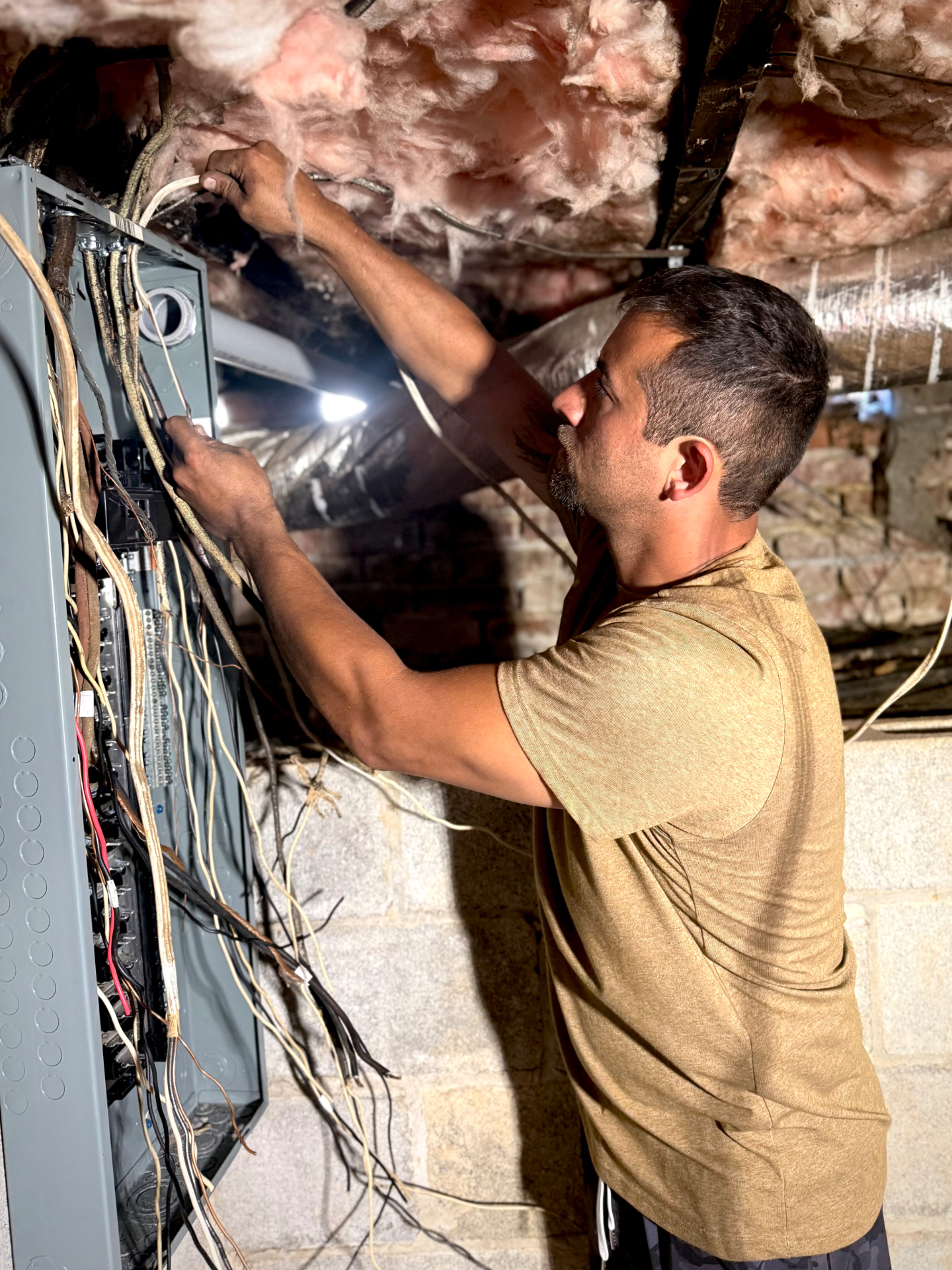
A tripping breaker may be doing its job
A circuit breaker opens when electrical conditions exceed what it is designed to carry or when a fault occurs. Connected loads, damaged wiring, loose connections, a failing appliance and the breaker itself can all be part of the investigation.
Repeatedly resetting a breaker that trips again does not correct the cause. Leave it off and note what was operating. Immediate retripping, heat, odor, sound or visible damage makes that especially important.
GFCI and AFCI trips need context
GFCI and AFCI devices protect against different electrical conditions. Moisture, cords, appliances, shared wiring, damaged conductors and installation issues can produce trips, as can a failed protective device.
Which load triggers the trip, whether weather affects it and whether the problem follows one device are useful clues. A replacement made before those clues are tested may not last or may leave the original condition untouched.
Why lights flicker or change brightness
One lamp can flicker because of its bulb, socket, switch or dimmer. Several lights changing together can point toward a shared connection, neutral, branch circuit, service condition or utility-side issue. Large motors and appliances can also create a noticeable voltage change when they start.
The pattern matters: one fixture or several, one room or both sides of the house, only during a certain load or during calm conditions too. Dramatically bright and dim lights across different areas deserve prompt attention.
Partial power can start upstream
A dead group of outlets may trace back to a tripped protective device, failed receptacle, loose splice or open conductor at an earlier point on the circuit. Losing larger sections of the house can involve panel, service or utility equipment.
That is why the first dead outlet found is not always the failed part. Circuit tracing follows what shares the path rather than treating each room as independent.
How testing narrows the fault
Voltage and load readings, continuity checks, circuit tracing and targeted inspection help compare normal points with affected ones. When a connection is carrying load, thermal imaging can reveal unusual heat that deserves investigation, but it supports rather than replaces electrical measurements.
Access may be needed at the panel, affected devices, connected equipment and selected attic, crawlspace, garage or exterior junction points. The least invasive useful path comes first.
Before the appointment
Write down when the symptom happens, what lights or equipment were running and every room or device affected. Mention storms, renovations, drilling, new appliances or recent electrical work. A photo or short video of flickering can help if it can be captured without approaching damaged equipment.
Do not remove covers, open the panel or repeatedly reset protection. Stop using equipment that smells hot, sparks or appears damaged. Those observations are enough; diagnosis should not require a homeowner to experiment with energized wiring.