
The Electrical Mystery That Had Everyone Stumped: When the Problem Wasn't in the House
As a licensed residential electrician, I receive calls every week about breakers tripping. Most of the time, the cause is fairly straightforward — a loose connection, an overloaded circuit, a damaged appliance, or worn electrical equipment.
But every once in a while, a job comes along that reminds you why electrical troubleshooting is just as much detective work as it is electrical knowledge.
This was one of those jobs.
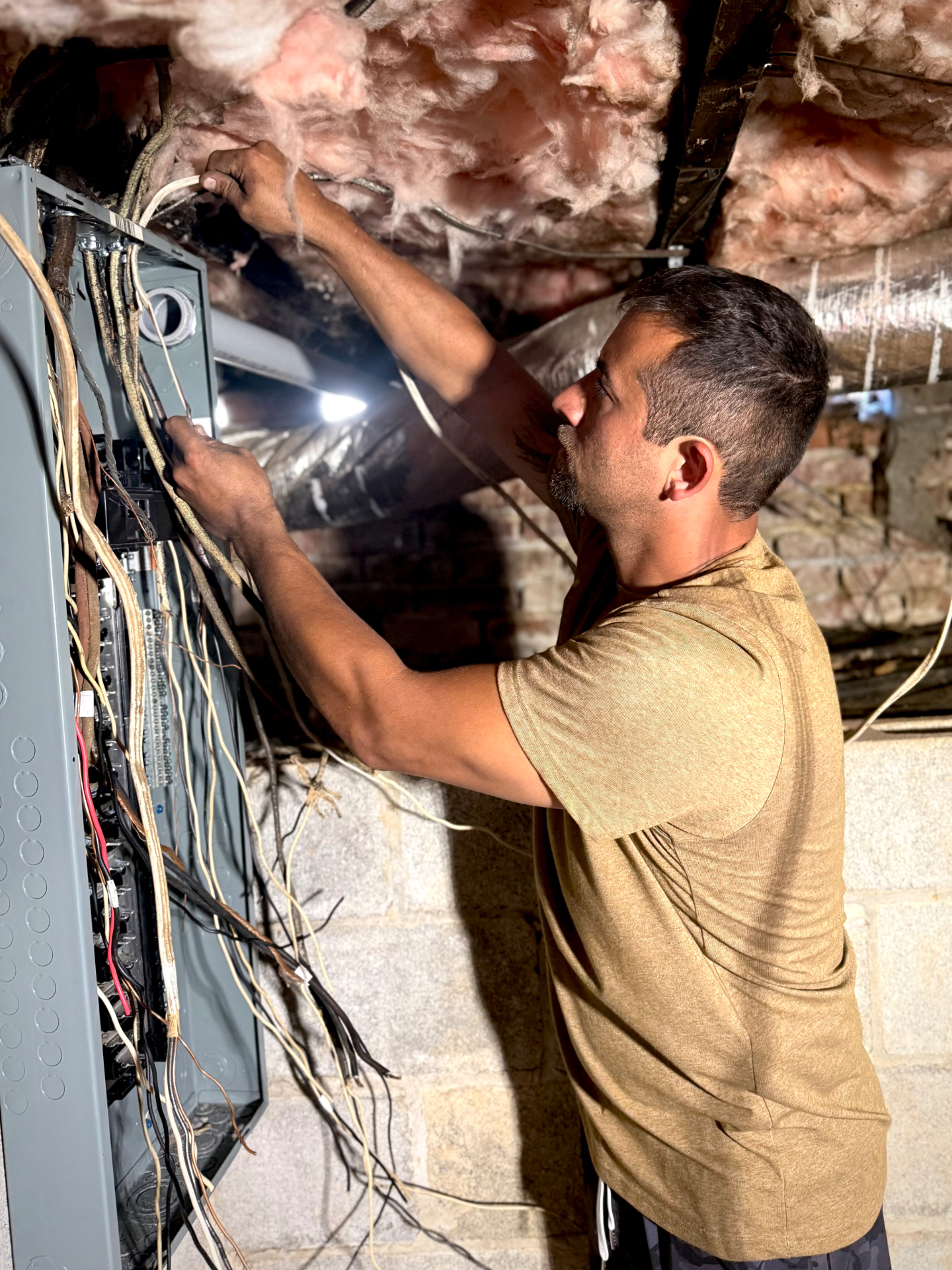
A Call from the Mountains of East Tennessee
Recently, I received a call from a homeowner in Sneedville, Tennessee, a quiet mountain town tucked away in East Tennessee, known for its beautiful scenery, bluegrass roots, and as the hometown where country music star Morgan Wallen grew up.
The homeowner had exhausted nearly every option.
His home was brand new.
The electrical installation had passed inspection.
The utility company had already been to the property — twice.
Everything appeared to be installed correctly.
Yet several Arc Fault Circuit Interrupter (AFCI) breakers continued tripping randomly. Sometimes plugging in a simple appliance would trip a breaker. Other times everything worked perfectly.
Nobody could explain why.
After listening to everything that had already been done, I told him something I truly believe.
"I've never left a job without finding the problem."
So I loaded my tools and headed toward Sneedville.
A Property at the End of the Line
When I arrived, I quickly realized this wasn't an ordinary service call.
The homeowner owned nearly 280 acres, and his home sat at the very end of the utility's electrical distribution system. There were no homes beyond his, making his property the last stop on that section of the power line.
The electrical service was substantial:
400-amp electrical service.
One 200-amp panel feeding the home.
One 200-amp panel feeding the shop.
Everything looked professionally installed.
Nothing appeared out of place.
Understanding AFCI Breakers
Before I explain what happened next, it's important to understand what an AFCI breaker actually does.
Many homeowners believe AFCI breakers are simply 'too sensitive.'
They're not.
An Arc Fault Circuit Interrupter is designed to detect dangerous electrical arcing before it has a chance to start a fire.
Unlike a standard breaker that trips only when too much current flows, an AFCI constantly analyzes the electrical waveform. If it detects the unique electrical signature created by dangerous arcing, it immediately disconnects power to protect your home.
Arcing can occur because of loose connections, damaged wiring, failing devices, or deteriorated insulation. Those tiny arcs may never draw enough current to trip a standard breaker, but they can generate enough heat to ignite surrounding materials.
That's why AFCI protection has become one of the most important electrical safety advancements in modern homes.
When an AFCI trips repeatedly, it's usually trying to tell you something.
The challenge is figuring out exactly what.
The Investigation Begins
I started where every electrician should.
I inspected both electrical panels.
I checked every neutral connection.
I verified the grounding system.
I inspected the bonding.
I tested the branch circuits.
Everything checked out.
Nothing explained why multiple AFCI breakers continued tripping.
Because I suspected there could be an issue with the incoming electrical service, I contacted the utility company.
They returned to the property.
Together, we inspected the service again.
To eliminate the possibility of a poor neutral connection, the utility installed an additional neutral connection.
We tested everything again.
Nothing changed.
The breakers still tripped.
At that point, many people would have started replacing breakers or blaming the wiring inside the home.
I wasn't convinced.
Something still didn't add up.
Looking Down the Holler
I stepped outside and looked down the holler.
That's when something caught my attention.
Farther down the electrical distribution line was another transformer that had been daisy-chained onto the same section of the utility system.
It made me wonder...
What if the problem wasn't inside this house at all?
I asked the utility company to inspect that transformer and install an additional neutral connection there as well.
They agreed.
Once the work was completed, we tested the system again.
Every AFCI breaker held.
No nuisance trips.
No random faults.
Everything worked exactly as it should.
The Real Problem
The problem wasn't inside the home.
It wasn't in the electrical panel.
It wasn't the branch circuit wiring.
It wasn't defective breakers.
The issue originated on the utility's electrical distribution system.
Everyone had been searching inside the house because that's where the symptoms appeared.
The actual cause was farther down the line.
The Takeaway
Electrical troubleshooting isn't about replacing parts until something works.
It's about understanding the entire electrical system — from the utility transformer all the way to the outlet in your living room.
Sometimes the problem is exactly where you expect it.
Sometimes it's hundreds of feet away.
This job is a reminder that experience matters. The solution wasn't found by guessing. It was found by continuing the investigation after everyone else thought there were no answers left.
At Trent Electrical, we don't replace parts and hope for the best. We take the time to diagnose the real problem, explain what we find, and work with homeowners — and when necessary, the utility company — to make sure the issue is truly resolved.
Sometimes the answer isn't inside the house. Sometimes you just have to keep looking down the holler.