Should You Replace a Federal Pacific (FPE) Electrical Panel?
An Honest Guide from a Licensed Residential Electrician
If you've landed on this page, chances are you've recently heard the words "Federal Pacific panel."
Maybe you're buying an older home. Maybe your home inspector pointed it out. Maybe another electrician recommended replacing it. Or maybe you simply opened your electrical panel one day and saw the words Federal Pacific Electric printed inside the door.
Whatever brought you here, you're probably asking the same question I hear from homeowners throughout East Tennessee every week.
"Do I really need to replace it?"
The honest answer isn't as simple as yes or no.
Over the years, I've inspected a lot of Federal Pacific panels. Some looked surprisingly clean for their age. Others had obvious signs of overheating before I even removed the cover.
Every home is different.
That's why I don't believe in telling homeowners that every Federal Pacific panel is automatically dangerous, nor do I believe they should all be ignored simply because they've "worked fine for years."
My goal isn't to scare you into replacing your electrical panel.
My goal is to help you understand what you have, why Federal Pacific panels have become one of the most discussed electrical panels in America, and why many electricians—including myself—often recommend replacement.
Once you understand the facts, you'll be able to make the decision that's right for your home and your family.
What Is a Federal Pacific Electrical Panel?
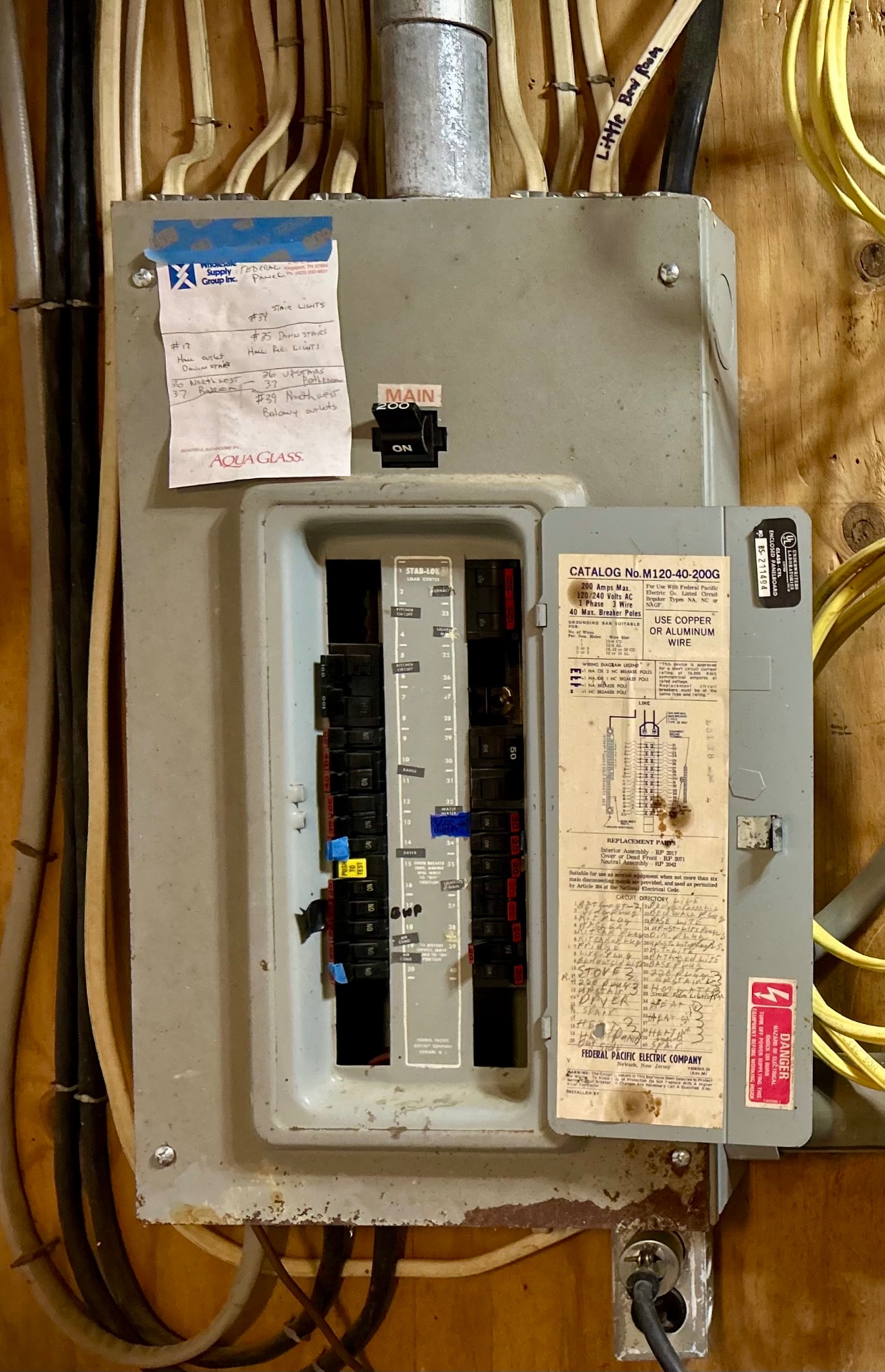
Federal Pacific Electric, commonly called FPE, manufactured millions of residential electrical panels from the 1950s through the early 1980s.
During that time they were one of the largest electrical equipment manufacturers in the country.
If your home was built during those years, especially between the 1960s and late 1970s, there's a good chance one was installed.
The most common version is called the Stab-Lok® panel.
Most homeowners don't even know they have one until an electrician or home inspector points it out.
They're easy to recognize by the Federal Pacific label and the distinctive red-striped breakers found inside many models.
Even today, decades after they stopped being installed in new homes, thousands of these panels remain in service across the United States.
That alone tells you something.
These panels aren't rare.
I still find them in homes throughout Hawkins County and the surrounding East Tennessee area.
Why Are Federal Pacific Panels So Controversial?
To understand the concern, you first have to understand what a circuit breaker is designed to do.
Think of your circuit breaker as a safety device.
Its entire purpose is to protect the wiring hidden inside your walls.
When too much electricity begins flowing through a circuit because of an overload or a short circuit, the breaker should trip almost instantly before the wiring overheats.
Most homeowners never think about their breakers because they quietly do their job for years.
The concern surrounding Federal Pacific Stab-Lok breakers comes from decades of independent testing and investigations that reported some breakers failed to trip under certain overload and short-circuit conditions.
If a breaker doesn't trip when it's supposed to, electricity can continue flowing through the wiring longer than intended.
That's why these panels have been discussed by electricians, engineers, home inspectors, and insurance companies for many years.
Now here's something that's equally important.
Not every Federal Pacific panel has failed.
Not every home with one has experienced a fire.
In fact, many homeowners have lived with these panels for decades without ever experiencing an obvious electrical problem.
You'll often hear someone say,
"Mine has been there fifty years without any issues."
They may be absolutely right.
But electrical safety isn't measured during normal operation.
It's measured during the one moment something goes wrong.
That's when your breaker has one job.
Protect your home.
What I Look For During an Inspection
One thing I want homeowners to understand is that when I inspect a Federal Pacific panel, I'm not walking into the house looking for reasons to sell a panel replacement.
I'm looking for information.
Every inspection begins the same way.
I carefully remove the panel cover and start evaluating the entire electrical system.
Some of the things I'm looking for include:
Burn marks.
Evidence of overheating.
Rust or moisture damage.
Water intrusion.
Burned bus bars.
Loose breaker connections.
Double-tapped breakers.
Damaged insulation.
Previous DIY repairs.
Proper grounding and bonding.
Overall workmanship.
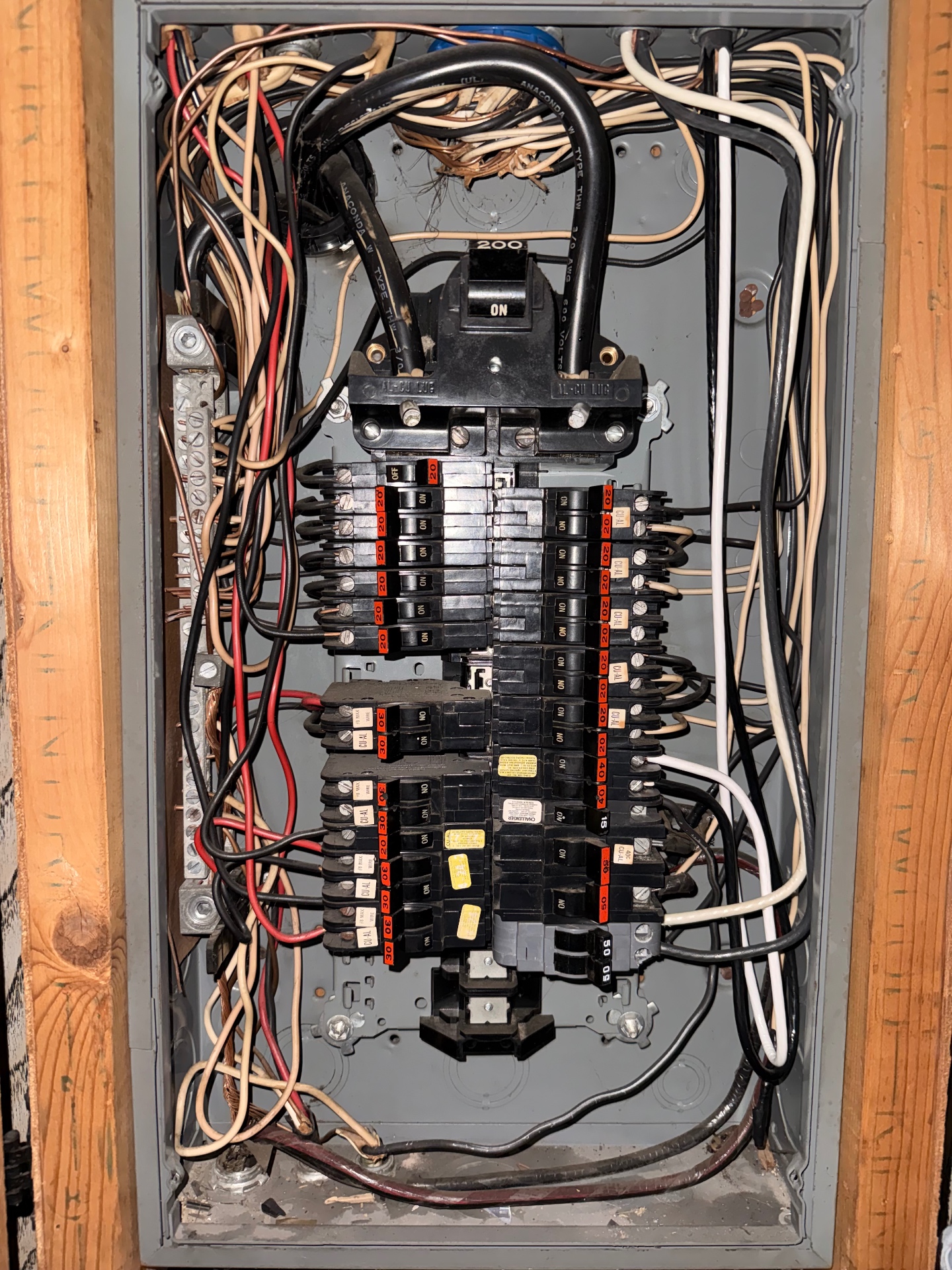
Sometimes I remove the cover and find a panel that's surprisingly clean for something over fifty years old.
Other times I immediately see overheating, corrosion, damaged breakers, or repairs that should never have been made.
The name on the cover only tells part of the story.
The condition of the panel tells the rest.
It's Not Just About Safety—It's About Practicality
Whenever Federal Pacific panels come up, the conversation almost always focuses on safety.
That's understandable.
But honestly, I think there's another reason many homeowners decide to replace them that doesn't get talked about enough.
Practicality.
I like to compare it to owning a classic vehicle.
Imagine trying to keep a 1920s Indian motorcycle on the road.
Or imagine owning an old six-volt Volkswagen Beetle and deciding you want to add air conditioning, GPS navigation, Apple CarPlay, heated seats, and all the conveniences of a modern vehicle.
Could you keep that old vehicle running?
Probably.
Would it become more difficult every year?
Absolutely.
Parts become harder to find.
Repairs become more expensive.
Every upgrade requires another compromise because the equipment simply wasn't designed for today's technology.
Older electrical panels are very similar.
Federal Pacific panels were designed decades before electric vehicle chargers, tankless water heaters, whole-home surge protectors, standby generators, home offices, large HVAC systems, and today's electrical demands became common.
Even when replacement breakers are available, you're still investing money into equipment that's well past the point most homeowners expected it to still be in service.
A modern electrical panel isn't just about improving safety.
It's easier to maintain.
Replacement parts are readily available.
Future upgrades become much simpler.
And you'll have confidence that your electrical system is ready for whatever your family needs ten or twenty years from now.
Personally, I think that's just as compelling as the safety discussion.
Should You Replace It If It's Never Given You Trouble?
This is probably the question I hear more than any other.
"If it's worked for fifty years, why replace it now?"
That's a fair question.
The truth is, many Federal Pacific panels have operated for decades without an obvious problem.
But circuit breakers are like smoke alarms or seat belts.
You don't judge them by the years they sat quietly doing nothing.
You judge them by whether they'll perform correctly when they're finally needed.
That's the part nobody can predict just by looking at the outside of the panel.
When homeowners ask me what I would do if this panel were in my own home, my answer is usually pretty simple.
I wouldn't panic.
I also wouldn't spend thousands of dollars remodeling a kitchen, adding an EV charger, finishing a basement, or upgrading expensive appliances while leaving a fifty-year-old electrical panel at the center of the entire system.
If it were my house, I'd make plans to replace it when it made financial sense—not because I believe every Federal Pacific panel is guaranteed to fail tomorrow, but because I believe investing in modern electrical equipment is simply the better long-term decision.
Can You Just Replace the Breakers?
One of the questions I hear most often is, "Can I just replace the breakers and keep the panel?"
The answer depends on why you're replacing them.
If a breaker has physically failed, that's one situation. But if your concern is the age and overall reliability of the electrical system, replacing individual breakers usually doesn't address the bigger picture.
Think of it this way.
Replacing breakers in an aging Federal Pacific panel is a little like putting brand-new tires on a truck with a worn-out engine and a rusted frame. The tires may be new, but they don't change the condition of everything else.
An electrical panel is more than just the breakers. It also includes the bus bars, breaker connections, neutral bars, grounding system, and the enclosure itself. After fifty or sixty years of service, all of those components deserve to be evaluated—not just the breaker someone happens to be looking at.
That's why I always inspect the entire panel before making recommendations.
Remodeling? This Is the Perfect Time to Think About Your Panel
One thing I've noticed over the years is that homeowners will spend thousands of dollars remodeling a kitchen, finishing a basement, or adding a new HVAC system while leaving a fifty-year-old electrical panel at the center of everything.
It reminds me of renovating a beautiful house while ignoring the foundation.
Modern homes use more electricity than ever before.
Electric vehicle chargers.
Heat pumps.
Tankless water heaters.
Home offices.
Large televisions.
Gaming systems.
Whole-home surge protection.
Standby generators.
These simply weren't part of everyday life when Federal Pacific panels were being installed.
If you're already investing in your home, it often makes sense to look at the electrical system that powers it.
Buying a Home With a Federal Pacific Panel
Finding an FPE panel during a home inspection doesn't automatically mean you should walk away from the purchase.
Instead, it means you should gather more information.
Have the panel inspected by a licensed electrician.
Ask questions.
Understand what you're buying.
Sometimes the panel is one of several upgrades the home will eventually need. Other times, replacing the panel becomes part of the purchase negotiations.
The important thing is making an informed decision instead of an emotional one.
What About Homeowners Insurance?
Insurance companies don't all have the same requirements.
Some companies insure homes with Federal Pacific panels without any concerns.
Others may ask additional questions or recommend replacement before issuing or renewing a policy.
If you're buying a home, it's a good idea to contact your insurance company early in the process so there are no surprises later.
Federal Pacific Panel Replacement in East Tennessee
If you're searching for a Federal Pacific panel replacement in East Tennessee, you're not alone. We still find FPE Stab-Lok panels in homes across Hawkins County, Hamblen County, and the surrounding area, especially in houses built between the 1960s and 1980s.
A typical Federal Pacific panel replacement starts with a thorough inspection. We look at the existing service size, the condition of the meter base and service entrance, whether the wiring is aluminum or copper, and what modern loads the home will need to support. From there we quote a flat-rate price in writing and coordinate the utility disconnect, permit, and inspection so you don't have to manage the details.
Most straightforward residential FPE panel replacements are completed in a single day, with power off to the house for several hours while we swap the panel, re-terminate the circuits, install proper grounding, and label every breaker. If the service also needs to be upgraded from 100 amps to 200 amps, or if the meter base needs replacement, the job may extend into a second day.
If you suspect your home has a Federal Pacific panel and want an honest, no-pressure inspection, Trent Electrical offers [panel upgrade assessments](/services/panel-upgrades) throughout Rogersville, Morristown, Church Hill, Kingsport, and the surrounding communities.
What Does a Modern Panel Offer?
When homeowners replace an older panel, they're not just buying a new metal box on the wall.
They're investing in the future of their home.
A modern electrical panel provides:
Current circuit breaker technology.
Easier maintenance and future repairs.
Readily available replacement parts.
Better support for modern electrical loads.
Simpler expansion for future projects.
Cleaner, more organized wiring.
Clearly labeled circuits.
Greater confidence in the electrical system.
Most homeowners only replace an electrical panel once.
It's an investment that will likely serve the home for decades.
Questions I Hear All the Time
"If my panel has worked for fifty years, why replace it now?"
That's a fair question.
Many Federal Pacific panels have been in service for decades without obvious problems.
The challenge is that circuit breakers are safety devices.
You don't know whether they'll perform correctly until they're needed during an overload or fault.
Just because something has worked in the past doesn't guarantee how it will perform in the future.
"Should I panic?"
Absolutely not.
Panic never helps anyone make a good decision.
Instead, learn what you have.
Have the panel inspected.
Understand its condition.
Then decide what makes the most sense for your home and your budget.
"Can I keep using my Federal Pacific panel?"
Many homeowners do.
Whether replacement makes sense depends on the panel's condition, your future plans for the home, and your comfort level with continuing to use equipment that's several decades old.
That's a conversation worth having with a qualified electrician.
If This Were My Home…
People ask me this all the time.
"What would you do if this were your house?"
Here's my honest answer.
I wouldn't panic.
I wouldn't assume the house was unsafe.
I also wouldn't ignore the fact that the electrical panel was designed more than fifty years ago.
If it were my home, I'd make replacing that panel part of my long-term plan.
Not because I believe every Federal Pacific panel is guaranteed to fail.
Not because I think fear is a good reason to spend money.
I'd replace it because I believe modern electrical equipment is simply a better investment.
It's easier to maintain.
Replacement parts are readily available.
Future upgrades are much simpler.
Whether you're adding an electric vehicle charger, installing a standby generator, remodeling your kitchen, or simply planning to stay in your home for years to come, a modern electrical panel gives you a solid foundation to build on.
To me, that's just common sense.
Final Thoughts
Federal Pacific electrical panels have earned their reputation for a reason, but every home deserves to be evaluated individually.
As a licensed electrician, my job isn't to scare homeowners into replacing equipment.
My job is to provide honest information, perform a thorough inspection, and help homeowners understand their options.
Sometimes replacement makes sense today.
Sometimes it's something to plan for in the future.
Every situation is different.
If your home has a Federal Pacific panel and you've been wondering what to do next, start with an inspection.
Understand what you have.
Ask questions.
Then make a decision based on facts—not fear.
At the end of the day, your electrical panel is the heart of your home's electrical system. Whether you decide to replace it now or later, understanding how it fits into the bigger picture is one of the best investments you can make as a homeowner.