
Why Does My Circuit Breaker Keep Tripping? A Tennessee Electrician Explains
By Ryan Trent, Licensed Residential Electrician
One of the most common phone calls I receive goes something like this:
"Part of my house doesn't have power."
"My lights quit working."
"My breaker keeps tripping."
The first question I usually ask is: "Have you checked your breaker panel?"
Some homeowners know exactly where their electrical panel is. Others aren't even sure where it's located.
If they tell me, "The breaker looks like it's on," I usually ask another question: "Is the breaker handle all the way to one side, or does it look like it's sitting somewhere in the middle?"
Here's something many homeowners don't realize. A circuit breaker doesn't always flip completely OFF when it trips. Most breakers stop in the middle, and at a quick glance they can actually look like they're still ON.
Trying to push the breaker back ON usually won't work.
I always tell homeowners to think of it like pulling back a slingshot. You have to push the breaker completely to the OFF position first until it clicks. Only then can you move it back to the ON position.
If you don't reset it all the way first, it usually won't latch back on.
Sometimes that's all it takes to restore power. Sometimes the breaker immediately trips again. If it does, the breaker is trying to tell you something.
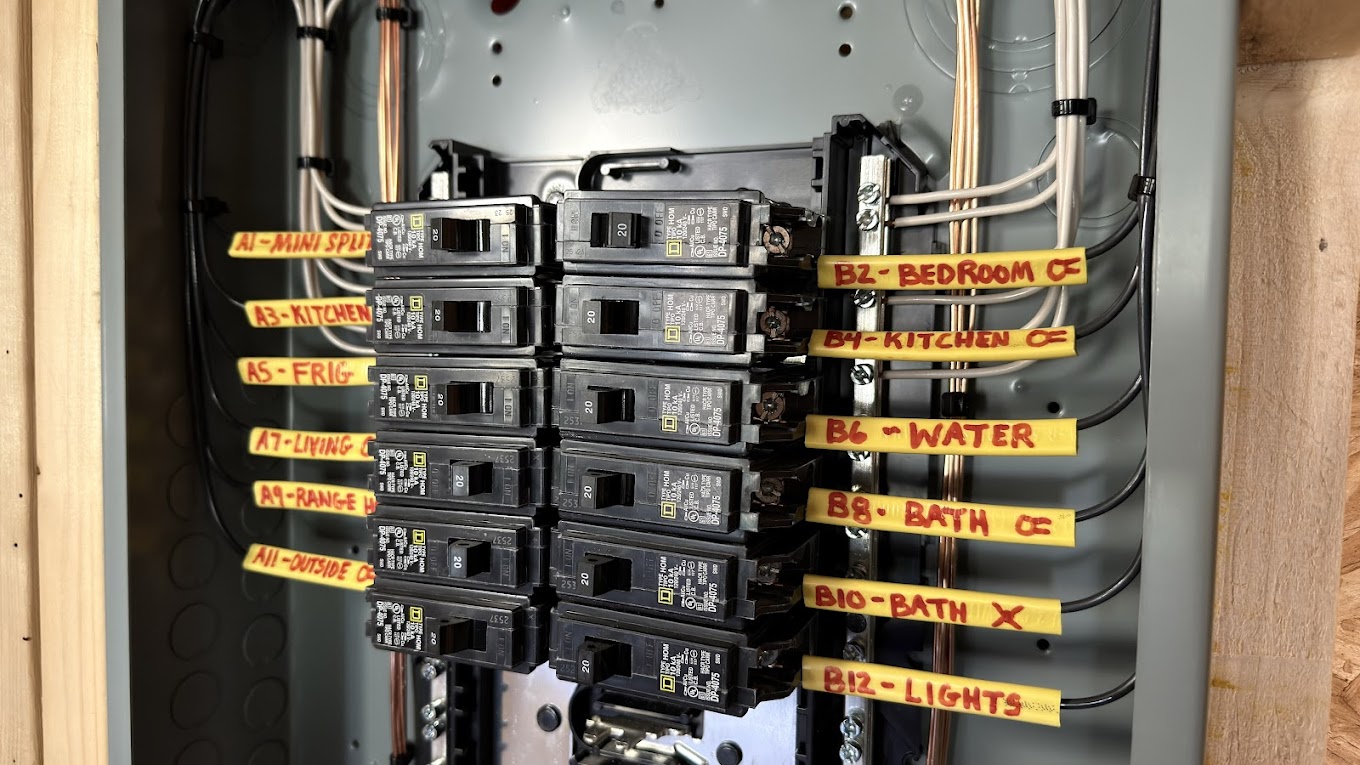
One of the First Questions I Ask
If the breaker continues tripping, one of the next questions I usually ask is: "How old is the home?"
Most homeowners wonder why I ask that.
The age of the home gives me a good idea of what electrical code was in effect when it was built and what type of breakers I'm likely dealing with before I ever arrive.
Whenever possible, I'll also ask homeowners to send me a picture of their electrical panel. That single picture can tell me a lot before I even leave for the job.
Every Breaker Doesn't Trip for the Same Reason
One of the biggest misconceptions is believing every tripped breaker has the same cause. That's simply not true.
The reason depends on the type of breaker protecting that circuit.
Standard Circuit Breakers
A standard breaker commonly trips because of:
Too much electrical load on one circuit.
A short circuit.
A damaged appliance.
Loose or damaged wiring.
An overloaded circuit is the most common cause we see. It happens when too many devices draw power at the same time on a single circuit. A 15-amp bedroom circuit was never meant to run a space heater, a gaming computer, and a television all at once. The breaker trips because the wire would overheat if the current kept flowing.
A short circuit is more serious. It means a hot wire has come into contact with a neutral or ground wire, creating a sudden surge of current. Shorts often produce a loud pop, a burning smell, or visible scorching around an outlet or switch. If you suspect a short, leave the breaker off and call an electrician.
GFCI Breakers
Ground Fault Circuit Interrupter (GFCI) breakers are designed to protect people from electric shock.
These breakers often trip when electricity finds an unintended path to ground.
Sometimes that's caused by moisture. Sometimes it's damaged wiring. Sometimes the neutral and ground are touching somewhere they shouldn't.
AFCI Breakers
Arc Fault Circuit Interrupter (AFCI) breakers are designed to detect dangerous electrical arcing that could lead to a fire.
I've seen AFCI breakers trip because two branch circuits were sharing neutrals incorrectly.
I've also found damaged wiring, loose electrical connections, and other hidden problems that caused nuisance tripping.
Every situation is different. That's why it's impossible to accurately diagnose every tripping breaker over the phone.
Common Causes of a Tripping Breaker in East Tennessee Homes
After years of troubleshooting breaker problems across Hawkins County and the surrounding area, we've noticed a few patterns that show up again and again.
In older homes, especially those built before the 1990s, we frequently find overloaded 100-amp services. The house was designed for a much smaller electrical load. Add a modern heat pump, an electric dryer, a microwave, and a few window air conditioners, and the service simply can't keep up. The breaker trips because the system is being asked to do more than it was built for.
In newer homes, AFCI and GFCI breakers are more common. These breakers are more sensitive by design, which is good for safety but can lead to nuisance tripping when older appliances, damaged cords, or incompatible devices are plugged in. Vacuum cleaners, older power tools, and some garage door openers are common culprits.
Storm damage is another frequent cause in our area. A close lightning strike can damage a breaker internally without making it obvious from the outside. After a major storm, we often get calls from homeowners whose breakers started tripping for no apparent reason. The breaker may have done its job during the surge but been weakened in the process.
If your breaker keeps tripping and you're not sure why, Trent Electrical can help. We offer [electrical troubleshooting and repair](/services/troubleshooting) throughout Rogersville, Morristown, Church Hill, Kingsport, and the surrounding communities.
When Should You Call an Electrician?
If your breaker:
Trips repeatedly.
Won't stay reset.
Trips immediately after resetting.
Feels hot.
Smells like it's burning.
Causes lights to flicker.
Stop resetting it over and over. The breaker is trying to protect your home.
Ignoring the warning signs could allow a much larger electrical problem to go unnoticed.
Final Thoughts
Every service call is different. Sometimes the repair is simple. Sometimes the breaker is warning us about a hidden wiring problem that needs attention.
The important thing to remember is this: circuit breakers almost never trip for no reason. They're designed to protect your family, your wiring, and your home.
If you're in Church Hill, Rogersville, Mount Carmel, Surgoinsville, Bulls Gap, or anywhere in Hawkins County, Trent Electrical can identify the cause and recommend the safest solution for your home.
Need Help?
If your breaker continues to trip after being reset correctly, don't keep forcing it back on. The breaker is doing exactly what it was designed to do—protect your home's electrical system.