Does Your Home Have Enough Power? Signs It May Be Time for an Electrical Panel Upgrade
My name is Ryan Trent, and I've lived here in East Tennessee my entire life. Growing up in Hawkins County, I've seen our little communities change over the years, but one thing has stayed the same — we're still small-town America.
We don't have skyscrapers lining our roads, and we don't have every major restaurant chain on every corner. Drive over the mountain into Clinch and you'll find places where there isn't even a traffic light. Head through parts of Mount Carmel and you'll drive for miles with most of the town sitting on one side of the road.
We're proud of that.
But while our towns have stayed small, one thing has changed dramatically — the amount of electricity we use every single day.
I can remember growing up when hardly anyone had a cell phone. Many homes didn't have game systems. Flat-screen TVs didn't exist. Most families had one television, a few lamps, maybe a microwave, and a window air conditioner. Nobody was thinking about charging multiple phones, tablets, laptops, smart watches, battery-powered tools, or electric vehicles.
Fast forward to 2026.
Even homes on the tightest budgets often have several smartphones, gaming consoles, Wi-Fi equipment, multiple televisions, computers, streaming devices, security cameras, and countless chargers plugged in around the clock. Move into the average middle-class home and the electrical demand grows even more. Tankless electric water heaters, larger HVAC systems, electric ranges, clothes dryers, dehumidification systems, workshops, pools, hot tubs, home offices, battery backups, and electric vehicle chargers all place significant demands on today's electrical systems.
Yes, modern LED lighting is more efficient, and today's homes are insulated better than ever before. Those improvements certainly help lower energy consumption. But when we're talking about the total amount of electrical capacity your home needs, those savings are often outweighed by the number of new appliances and electronics we expect our homes to power.
Most homeowners don't think in terms of amps. They think in terms of, "Does my house have enough power?" or "Can I add this new appliance without causing problems?"
That's really the question.
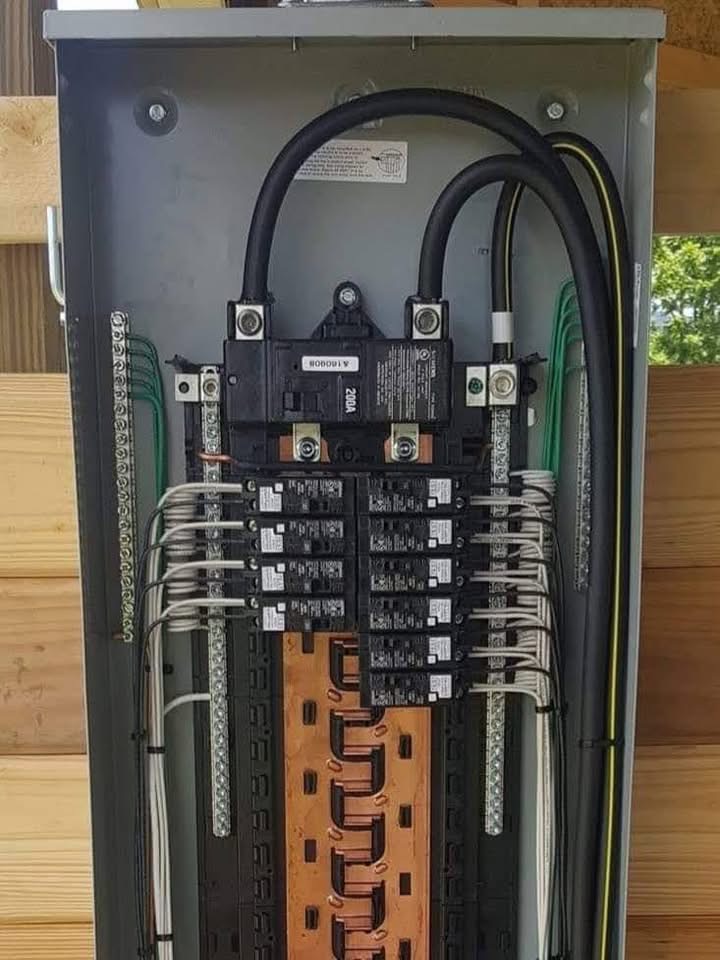
Your Electrical Panel Is Like the Heart of Your Home
Think of your electrical panel as the heart of your home's electrical system. Fifty years ago, homes simply weren't expected to power everything we rely on today. The electrical service that was perfectly adequate in the 1970s may now be asked to do nearly twice the work it was originally designed for.
That doesn't automatically mean every older home needs a panel upgrade. Many older homes are still perfectly safe and adequately sized. However, every home should be evaluated based on today's electrical demands — not yesterday's.
A common misconception is that because your lights come on and nothing appears to be wrong, your electrical system must be fine. Sometimes that's true. Other times, your electrical system is operating at or near its limits and you simply don't realize it because you've slowly added more electrical loads over the years.
Why Electrical Codes Continue to Change
That's one of the reasons the National Electrical Code continues to evolve. Every three years, electrical professionals review new technology, safety research, and real-world experiences to improve installation standards.
I'll be honest — some code changes make you scratch your head, while others make you wonder why they weren't required years ago. Regardless of personal opinions, the goal has always been the same: improve safety and reduce electrical hazards for homeowners.
As electricians, we use the National Electrical Code to determine the correct number of circuits, proper conductor sizes, breaker protection, grounding requirements, and ultimately the correct electrical service size for each individual home or business.
There isn't a one-size-fits-all solution.
What Is a Load Calculation?
This is where something called a load calculation comes into play.
A load calculation isn't someone looking at your panel and making an educated guess.
It's a calculation based on the National Electrical Code that considers the square footage of your home, heating and cooling equipment, kitchen appliances, water heater, laundry equipment, electric vehicle chargers, workshops, pools, hot tubs, and many other electrical loads to determine the proper service size.
Sometimes the answer is a 100-amp service.
Sometimes it's 200 amps.
Larger homes with multiple HVAC systems, detached garages, workshops, or several electric vehicle chargers may require a 320-amp or even a 400-amp service.
Every home is different.
Bigger Doesn't Mean Higher Electric Bills
One misconception I hear all the time is that installing a larger electrical panel means your electric bill will increase.
That's simply not true.
Installing a 200-amp panel instead of a 100-amp panel doesn't force your home to use more electricity. It simply gives your home the ability to safely deliver the power that's already being demanded.
Think about it like this.
If you replace a narrow two-lane road with a four-lane highway, traffic doesn't increase simply because there are more lanes. The larger highway just allows traffic to move more safely and efficiently when demand increases.
Your electrical service works the same way.
Signs Your Home May Need a Panel Upgrade
Although every home is different, here are some common signs that your electrical system may deserve a closer look:
Breakers trip frequently.
Lights dim when your HVAC system starts.
You're using extension cords because you've run out of outlets.
Your electrical panel has no room for additional breakers.
You're planning to install a hot tub, workshop, detached garage, or electric vehicle charger.
Your home still has an older 60-amp or 100-amp electrical service.
You're remodeling your home or adding square footage.
Your insurance company has concerns about your existing electrical equipment.
These symptoms don't automatically mean you need a panel upgrade. Many electrical issues have completely different causes. That's why it's important to have your electrical system evaluated rather than assuming.
Questions I Hear All the Time
One question homeowners often ask me is, "If my breakers aren't tripping, doesn't that mean everything is okay?"
Not necessarily.
Circuit breakers are designed to protect wiring from overheating. They don't necessarily tell you whether your home's electrical service is properly sized for today's electrical demands.
Another question I hear is, "Can I just replace the panel without upgrading everything else?"
Sometimes yes.
Sometimes no.
Every home is different. In some situations, only the electrical panel needs replacing. In others, the meter base, service entrance cable, grounding system, or other components also need updating to meet current safety standards.
That's why every project begins with an inspection instead of a guess.
Planning Ahead Can Save Money
One thing I always encourage homeowners to think about is not just today's needs, but tomorrow's as well.
Maybe you don't own an electric vehicle today.
Maybe you're planning to finish your basement next year.
Maybe you've always wanted a hot tub, detached garage, or workshop.
Electrical upgrades are often much easier and less expensive when they're planned during a remodel rather than after you've already outgrown your electrical system.
I've had many homeowners tell me, "I wish I would've done this while everything was already torn apart."
Planning ahead almost always pays off.
Safety Is More Than Convenience
Many people think a panel upgrade is simply about adding more breaker spaces.
That's only part of the story.
A properly sized electrical service helps ensure your home's electrical system operates the way it was designed. It gives your home room to grow, allows future upgrades, and helps reduce unnecessary stress on electrical equipment.
Your electrical system is one of the few things in your home you use every single day without even thinking about it.
Every light switch.
Every outlet.
Every appliance.
Every charger.
Every heating and cooling cycle.
It all depends on your electrical service working safely and reliably.
My Advice
I've worked on homes all across East Tennessee — from farmhouses that have stood for generations to brand-new custom homes. Every house tells a different story.
Some older homes have electrical systems that are still perfectly capable of meeting today's demands.
Others have reached the point where an upgrade simply makes sense.
That's why I don't believe in recommending the same solution for everyone.
My job isn't to sell you the biggest electrical service available. My job is to evaluate your home's electrical system, perform the proper load calculations, explain your options, and recommend what your home actually needs.
Sometimes that's a complete service upgrade.
Sometimes it's simply adding a few dedicated circuits.
Sometimes it's explaining that your existing system is already more than adequate.
Every home is different, and every homeowner deserves an honest answer.
If you've ever wondered whether your home has enough electrical capacity for today's lifestyle — or for what you plan to add in the future — having a licensed electrician perform a proper evaluation is one of the smartest investments you can make. Whether the answer is "you're in great shape" or "it's time to upgrade," you'll have the peace of mind that comes from knowing your home's electrical system is prepared for today and for many years to come.